


Workshop: Artificial Intelligence and Learning
Date: May 13, 2026 (Online workshop)
Format: Online educational workshop
On May 13, 2026, an educational online workshop was held, dedicated to the application of artificial intelligence (AI) in education and learning. The workshop presented practical applications of AI tools in various learning scenarios, focusing on how technology can improve the experience of students and practitioners in the health and social sectors.
Key concepts were presented using AI as a foreign assistant that is patient, kind, and available 24/7, creating a safe learning environment without fear of grading or shame. Participants were introduced to three main areas of AI application: skill acquisition, simulations, and data modeling.
Practical examples from real-world practice were particularly addressed, including physical rehabilitation analysis where AI is used for data analysis and visualization of patient progress, as well as the concept of serendipity - finding new, unexpected solutions through conversations with AI tools. The workshop emphasized the importance of experiential learning, where trying, experimenting, and learning from mistakes are the foundation for deep knowledge transfer.
The conclusion was that AI as an educational tool makes learning more accessible, safer, and more personalized for each individual, opening new opportunities for the development of skills and knowledge at all levels - from beginners to advanced users.
Workshop Photo Gallery
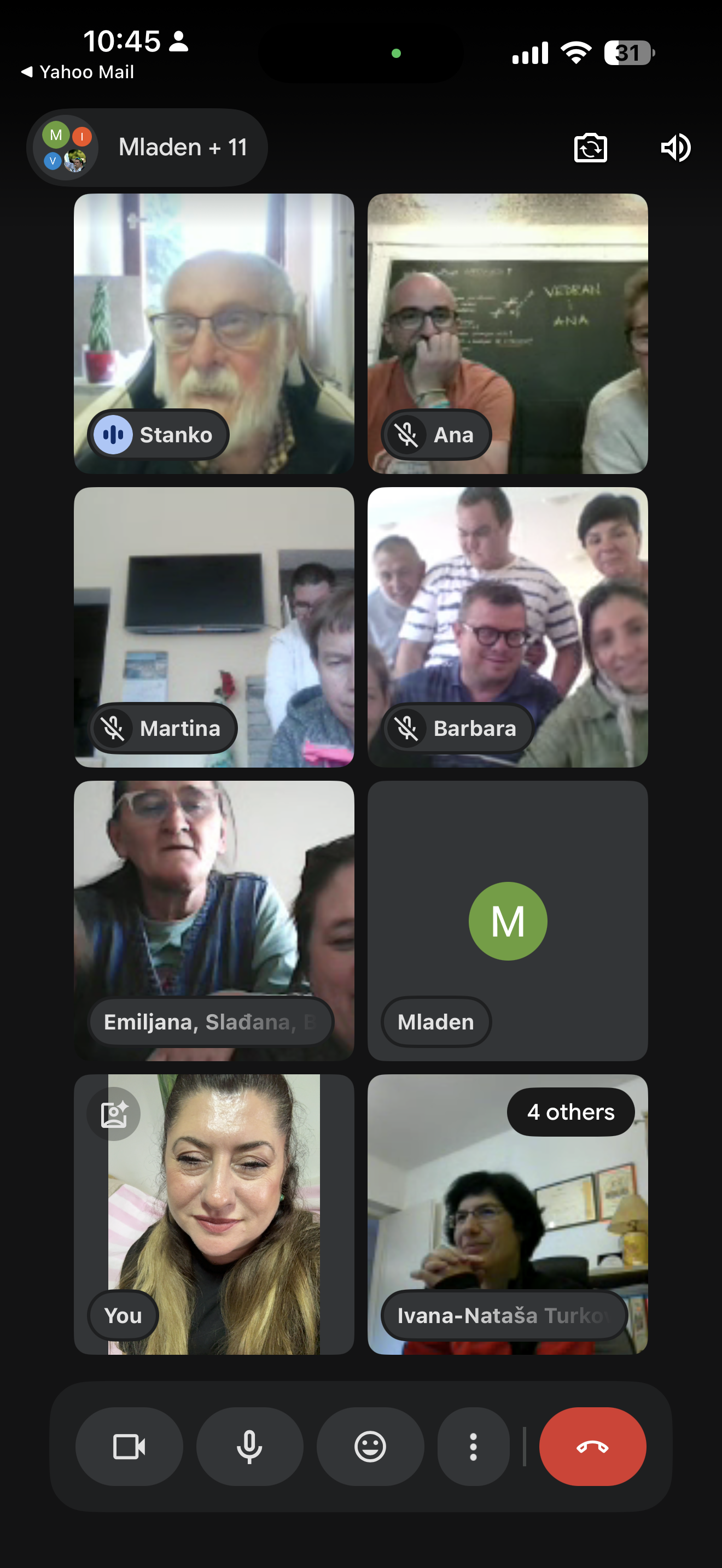
Active discussion and exchange of opinions with participants
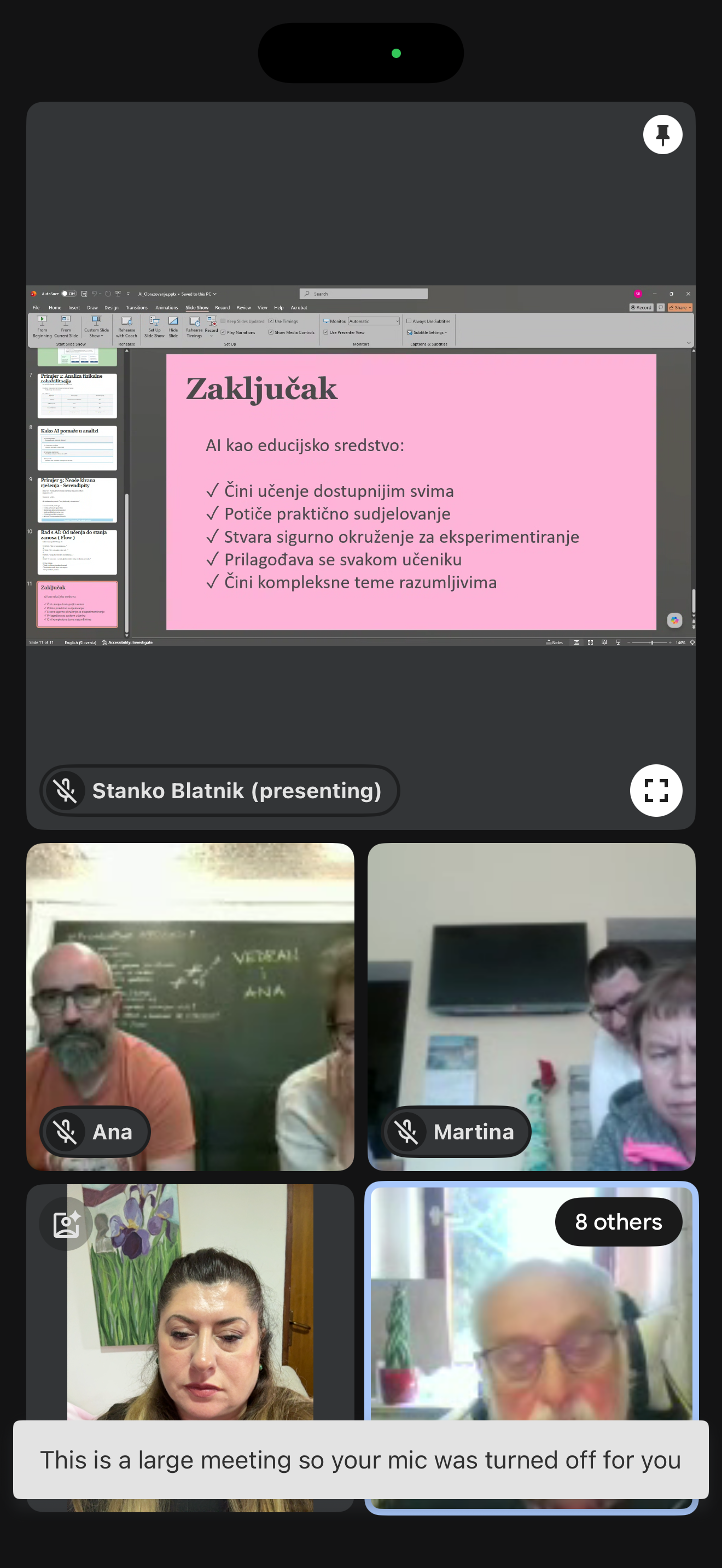
Staff team in active discussion and sharing experiences
Workshop Conclusions
AI as an educational tool has transformative potential in the health and social sectors:
- ✓ Accessibility: Makes learning more accessible to everyone, wherever they are and at any time
- ✓ Safety: Encourages practical participation and experimentation without fear
- ✓ Personalization: Adapts to each student and their needs
- ✓ Clarity: Makes complex topics understandable through visualizations and explanations
- ✓ Innovation: Opens doors to serendipity - finding new, unexpected solutions
Key message: AI should be a tool that helps practitioners become better at their work, encourages their curiosity, and opens new possibilities - never a replacement for their expertise and humanity.
Workshop: Application of AI in Vocational Rehabilitation for People with Disabilities
Date: May 4, 2026
On May 4, 2026, an educational workshop was held for employees of an NGO dedicated to the vocational rehabilitation of people with disabilities. The workshop focused on the application of Artificial Intelligence (AI) within the context of social care and vocational rehabilitation.
Participants engaged in a lively discussion regarding the opportunities technology offers—from automating administrative tasks to personalizing rehabilitation programs—as well as the challenges organizations face. Specific topics addressed included AI reliability, misinformation, data protection, and the ethical frameworks for applying this technology in practice.
The discussion demonstrated that AI holds great potential in this sector, but only if applied with caution, critical thinking, and a clear focus on maintaining the human element in care for people with disabilities. AI should be a tool that assists employees, not a replacement for experts.
Workshop Photo Gallery
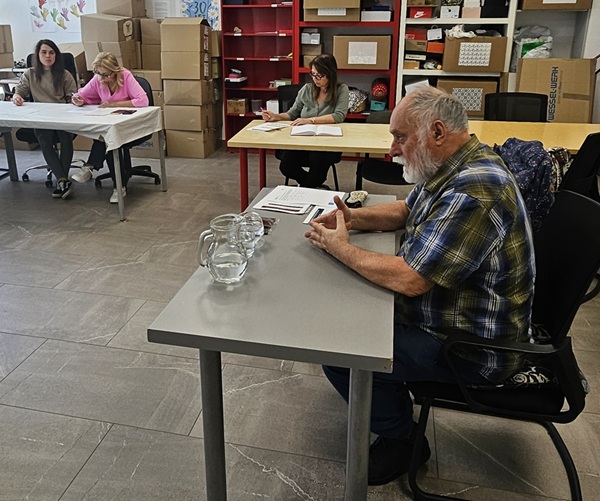
Active discussion and exchange of ideas with participants
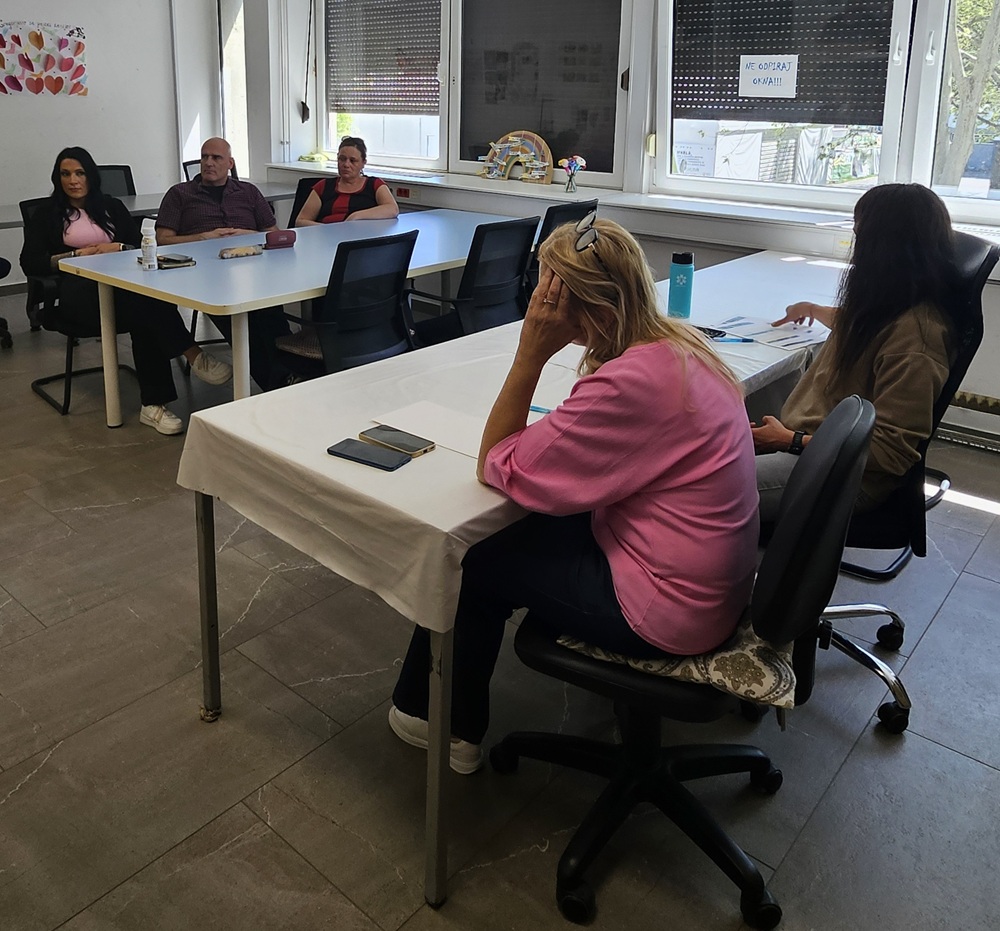
Staff team in active discussion and sharing experiences
Want to learn more?
A detailed report on the workshop, including identified benefits, challenges, and recommendations for the future, is available at the link below:
📄 Download Full Report (PDF)The report details all discussion topics, identified AI benefits, challenges, the future of technology, and practical recommendations for organizations.
Key Points from the Discussion
✓ Identified Benefits
- Automation of administrative tasks
- Personalization of rehabilitation programs
- Faster access to information
⚠ Identified Challenges
- Inaccurate and outdated information
- Reliability and trust issues
- Ethics, privacy, and data protection
🔮 The Future
- Better regulation and ethical frameworks
- Locally adapted solutions
- Continuous employee education
Multi-thematic Educational Workshop
Date: March 25, 2026
On March 25, 2026, a comprehensive educational workshop was held in Pula as part of the AI4Care project, funded by the European Union through the Erasmus+ program. The workshop gathered experts, caregivers, and employees of institutions working with people with disabilities, with the aim of introducing them to the possibilities and responsible application of artificial intelligence (AI) in daily practice.
The workshop program covered six thematic blocks: an introduction to AI and brain function, an overview of leading AI tools, practical use and prompt engineering, AI solutions for speech difficulties, applications for the blind and visually impaired, and ethical and legal issues regarding AI application. Each block included a theoretical introduction, demonstrations, and practical exercises.
Workshop Photo Gallery
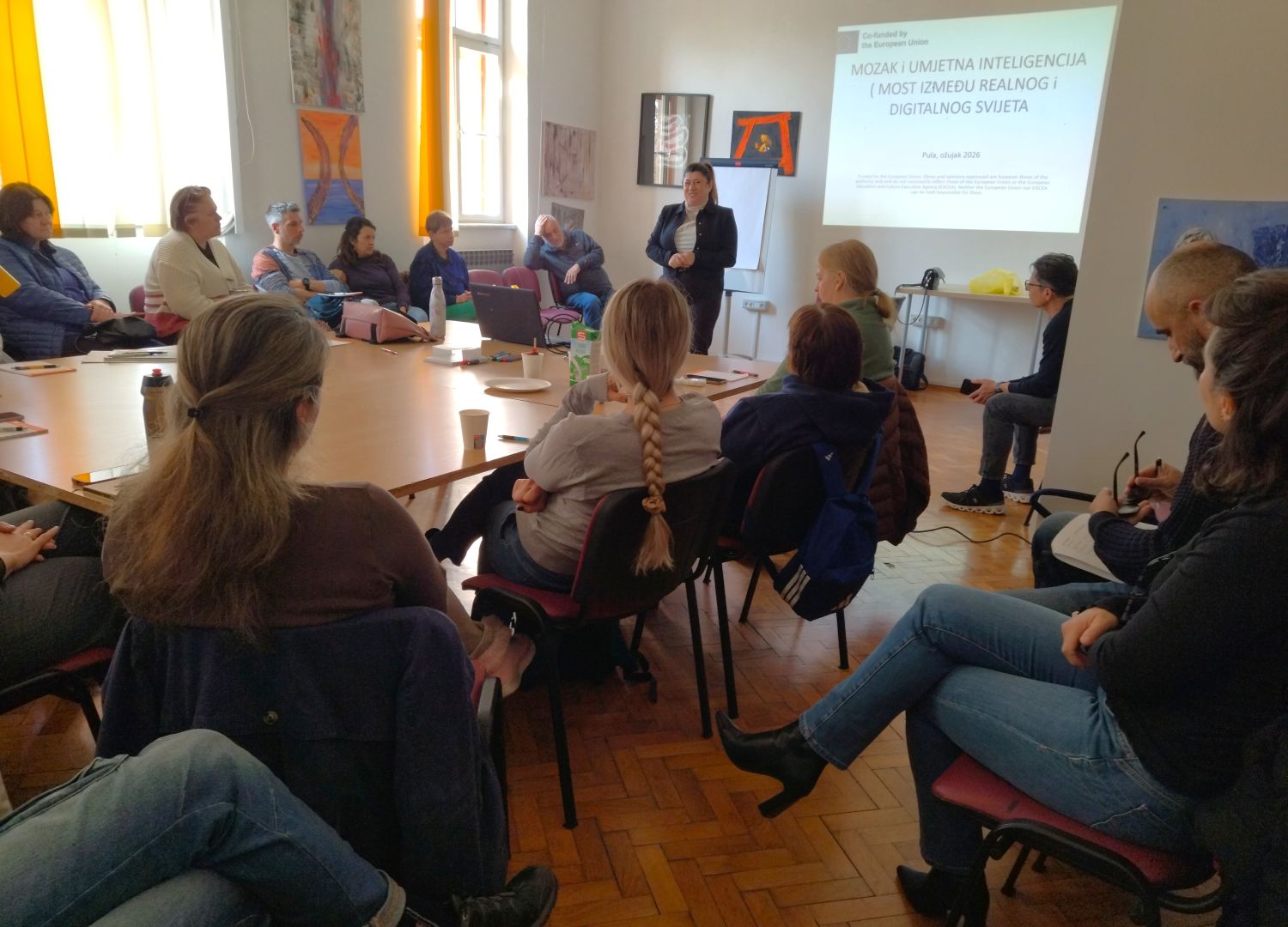
Active discussion and exchange of opinions with participants
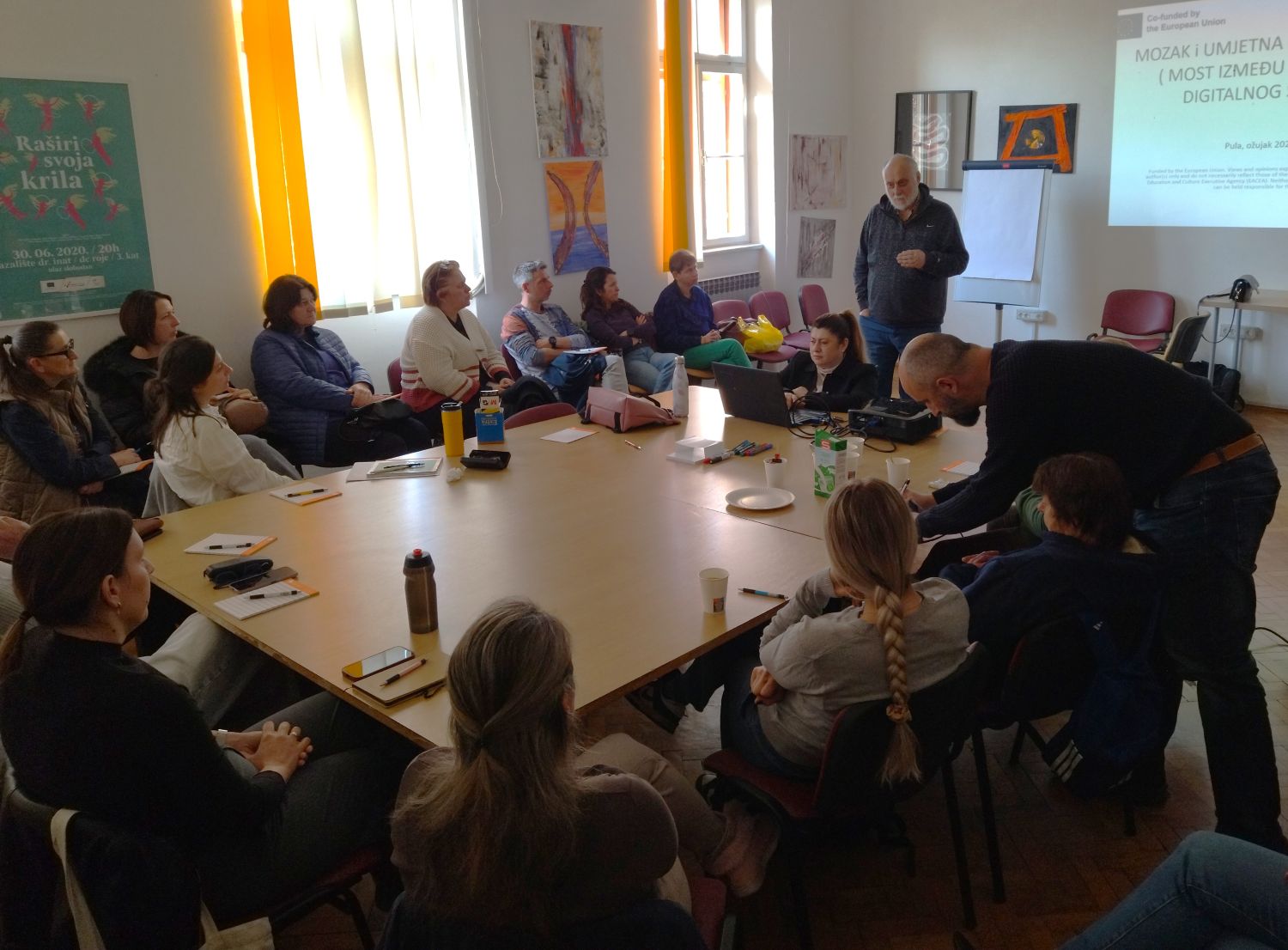
Staff team in active discussion and sharing experiences
Want to learn more?
A detailed report on the workshop, identified benefits, challenges, and recommendations for the future is available at the link below:
📄 Download Full Report (PDF)The report describes in detail all discussion topics, identified AI benefits, challenges, the future of technology, and practical recommendations for organizations.
Workshop Conclusions
- AI is a powerful tool, not a sage. Participants embraced the core message: AI is extremely useful but prone to hallucinations, biases, and "people-pleasing." Every response requires critical verification. The user always remains responsible for decisions.
- The quality of the prompt determines the quality of the response. The formula Role + Task + Context + Format drastically improves the utility of AI tools. Iteration, negative constraints, and "reverse questioning" are advanced techniques that participants can apply immediately.
- AI opens a new dimension of inclusion. Personalized tools such as Teachable Machine, Be My Eyes, and Seeing AI push the boundaries of accessibility – voice control and visual assistance are becoming available even for people with the most severe disabilities.
- Ethics and privacy are non-negotiable. Users' personal data must never enter AI tools. The EU AI Act (2024) classifies AI in social care as high-risk, which obligates institutions to stricter approval and monitoring processes.
- Experiential learning is the fastest path. The workshop confirmed that participants acquire AI competencies fastest through practical trial – attempt, experiment, and learning from mistakes in the safe environment of the workshop.
- AI does not replace the expert – it enhances them. Each module emphasized that AI should be a tool in the hands of the expert that increases efficiency, but does not replace expert supervision, human contact, or professional assessment.
First Educational Workshop
Date: March 14, 2026
On March 14, 2026, a comprehensive educational workshop was held at Topolšica as part of the AI4Care project, funded by the European Union through the Erasmus+ program. The workshop gathered experts, caregivers, and employees of institutions working with people with disabilities, with the aim of introducing them to the possibilities and responsible application of artificial intelligence (AI) in daily practice.
The workshop program covered six thematic blocks: an introduction to AI and brain function, an overview of leading AI tools, practical use and prompt engineering, AI solutions for speech difficulties, applications for the blind and visually impaired, and ethical and legal issues regarding AI application. Each block included a theoretical introduction, demonstrations, and practical exercises.
Workshop Photo Gallery

Active discussion and exchange of opinions with participants

Staff team in active discussion and sharing experiences
Workshop Conclusions
- AI is a powerful tool, not an intelligence that will replace human beings. We must learn to work with it, not against it.
- The quality of the prompt determines the quality of the response. We need to develop the skill of asking precise questions and applying critical thinking to the answers we receive.
- AI opens a new dimension of inclusion. However, we must learn to use it efficiently and ethically to ensure no one is left behind.
- AI does not replace caregivers — it empowers them. Human connection, empathy, and presence remain irreplaceable in supporting people with disabilities.